Are you trying to choose the perfect crib for your little one but feeling overwhelmed by the options? Understanding the difference between a standard crib and a mini crib can make your decision much easier.
You want something safe, comfortable, and fits well in your space. This guide will help you see how these two types of cribs compare, so you can pick the best one for your baby and your home. Keep reading—you’re about to discover key facts that will make your choice clear and stress-free.
Crib Size Comparison
Choosing the right crib size is important for your baby’s comfort and your space. Cribs come in different sizes, mainly standard and mini. Each size fits different needs and room sizes.
Dimensions Of Standard Cribs
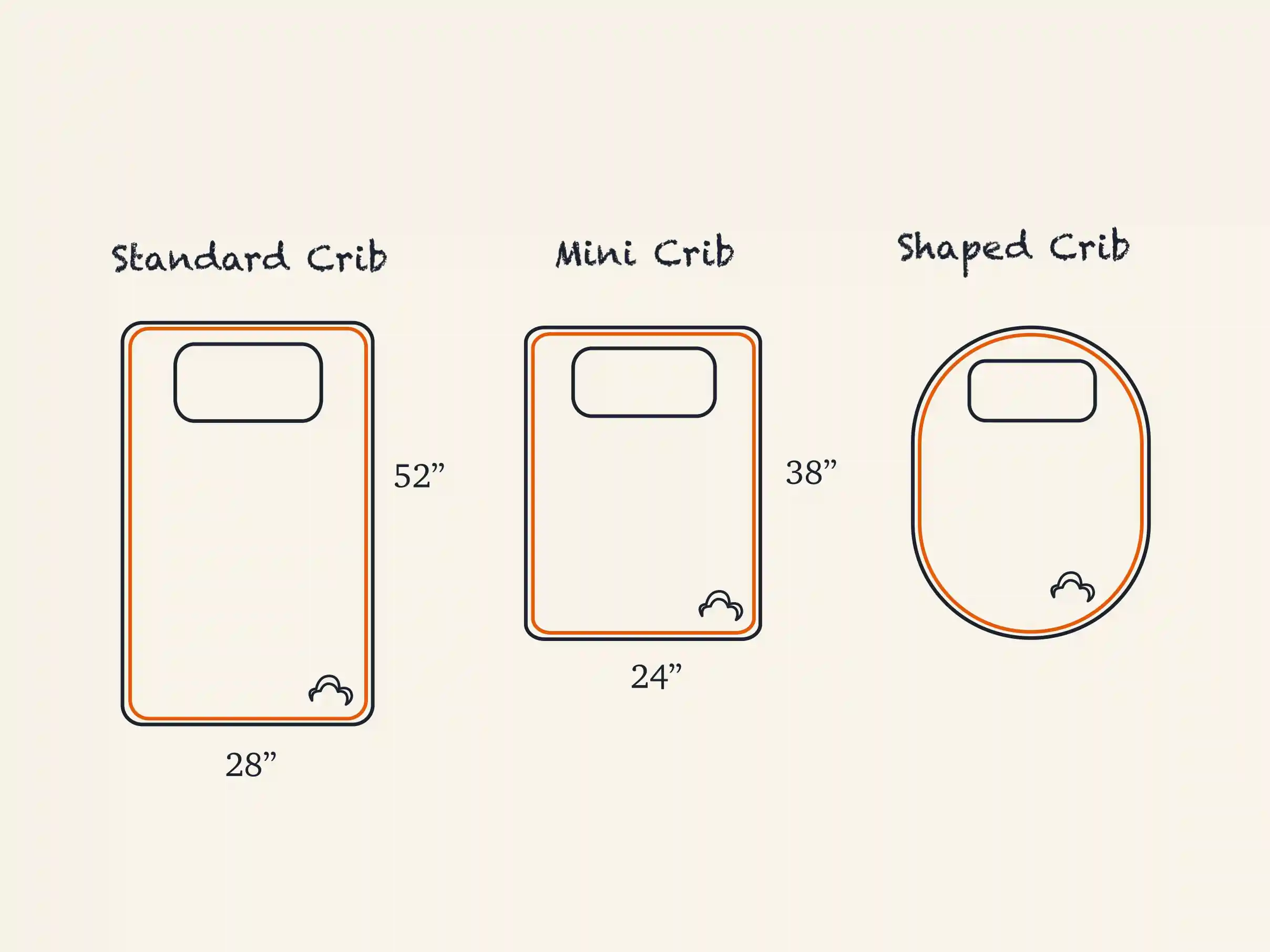
Standard cribs measure about 28 inches wide and 52 inches long. This size suits most babies from birth to toddler age. It offers ample space for your baby to move and grow. Standard cribs fit well in larger rooms and provide room for bedding and toys.
Dimensions Of Mini Cribs
Mini cribs are smaller, usually around 24 inches wide and 38 inches long. They save space in small rooms or apartments. Mini cribs are lightweight and easy to move. They work well for short naps or travel but may not last as long as standard cribs.
Portability And Space
Portability and space are key factors parents think about when choosing a crib. Both standard and mini cribs offer different benefits based on room size and moving needs. Understanding these differences helps in picking the right crib for your home.
Ease Of Moving Mini Cribs
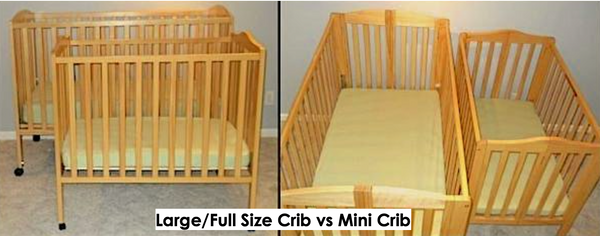
Mini cribs are lighter and smaller than standard cribs. This makes them easier to move around the house or even take on trips. Parents can shift a mini crib from one room to another without much effort. Its compact size fits well in tight spaces and vehicles. Mini cribs suit families who need flexible sleeping arrangements for their baby.
Space Requirements For Each Crib
Standard cribs need more floor space due to their larger size. They usually measure around 28 by 52 inches. This size fits well in bigger rooms with enough free space. Mini cribs are smaller, often about 24 by 38 inches. They work better in small bedrooms, apartments, or shared rooms. Choosing the right crib size helps keep the nursery comfortable and functional.
Cost Differences
Cost is a key factor when choosing between a standard crib and a mini crib. Both types serve the same purpose but differ in size and price. Understanding these differences helps parents make the best choice for their budget and space.
Price Range Of Standard Cribs
Standard cribs usually cost more than mini cribs. Their price starts around $150 and can go up to $500 or more. The price depends on the brand, materials, and design. Bigger size means more materials, which adds to the cost. Some standard cribs also convert into toddler beds, raising their price.
Affordability Of Mini Cribs
Mini cribs are generally more affordable. Prices often start near $100 and rarely exceed $300. Their smaller size means less material and lower shipping costs. Mini cribs suit smaller rooms and tight budgets. Despite the lower price, many mini cribs still offer good quality and safety features.
Safety Standards
Safety is the top priority when choosing a crib for your baby. Both standard and mini cribs meet strict safety rules. These rules help keep babies safe during sleep and play. Understanding these safety standards helps parents make the best choice for their child.
Each type of crib follows specific regulations. These rules cover materials, design, and construction. They ensure cribs prevent accidents and injuries. Let’s explore how safety standards apply to standard and mini cribs.
Regulations For Standard Cribs
Standard cribs must meet federal safety standards. These rules include slat spacing, mattress fit, and sturdy construction. Slats must be no more than 2 3/8 inches apart. This prevents babies from slipping through or getting stuck.
Standard cribs require a firm mattress that fits snugly. There should be no gaps larger than two fingers between mattress and crib sides. The crib must not have drop sides, which are banned due to safety risks.
Materials used in standard cribs must be non-toxic and free from harmful chemicals. Paint and finishes must pass strict safety tests. These rules ensure the crib is safe for daily use.
Safety Features In Mini Cribs
Mini cribs follow many of the same safety rules as standard cribs. Their smaller size means mattress and crib dimensions are tighter. This helps prevent gaps where babies could get trapped.
Mini cribs must also use strong, non-toxic materials. The slat spacing and mattress fit rules are the same as for standard cribs. This keeps the baby secure and comfortable.
Because mini cribs are compact, parents should check that they meet all safety certifications. Certified mini cribs provide peace of mind in baby safety. Always verify labels before purchase.
Longevity And Usability
Choosing the right crib means thinking about how long it will last and how useful it is. Longevity and usability are key factors for parents. A crib should serve your baby through many stages. It should also fit your space and lifestyle well. Understanding the difference between standard and mini cribs helps in making the best choice.
How Long Standard Cribs Last
Standard cribs are built to last from infancy to toddlerhood. They usually meet safety standards for children up to 3 years old. Many models convert into toddler beds or daybeds. This feature extends their use beyond the baby years. You can often use a standard crib for 5 to 7 years. Its larger size suits growing children comfortably. The sturdy design offers strong support over time.
Mini Cribs And Their Lifespan
Mini cribs are smaller and more compact. They fit well in tight spaces like apartments or guest rooms. Their lifespan is shorter than standard cribs. Most mini cribs serve babies until about 18 months. They rarely convert to toddler beds, limiting long-term use. Parents often switch to a toddler bed earlier with mini cribs. Despite the shorter lifespan, they offer great portability and convenience.
Design And Style Options
The design and style options of cribs play a big role in choosing the right one for your baby. These options affect how the crib fits in your room and matches your taste. Both standard and mini cribs offer different design choices. Understanding these can help you pick the best crib for your space and style.
Variety In Standard Crib Designs
Standard cribs come in many designs. You can find classic, modern, or even vintage styles. They often feature different colors like white, natural wood, or bold shades. Some have adjustable mattress heights and convertible functions. This variety lets you choose a crib that suits your room and grows with your child.
Limited Styles In Mini Cribs
Mini cribs have fewer design options. Most are simple and compact to save space. They usually come in basic colors and styles. The focus is on functionality rather than decorative features. Mini cribs are perfect for small rooms but offer less choice in design variety.
Best Use Cases
Choosing between a standard crib and a mini crib depends on your space and lifestyle. Each type serves different needs. Understanding their best use cases helps pick the right one for your baby’s comfort and safety.
When To Choose A Standard Crib
Standard cribs offer more room for your baby to grow. They suit larger nurseries with plenty of space. These cribs last longer, often converting into toddler beds. Parents planning for multiple children may prefer standard cribs. They provide a stable and spacious sleeping area. Use a standard crib if you want a long-term solution.
Ideal Situations For Mini Cribs
Mini cribs fit well in small rooms or apartments. They are perfect for limited space or shared rooms. Travel or grandparents’ houses benefit from mini cribs. These cribs are lightweight and easy to move. Mini cribs suit families needing portability and compactness. Choose a mini crib for short-term or flexible use.

Frequently Asked Questions
What Are The Size Differences Between Standard And Mini Cribs?
Standard cribs typically measure 52 inches long and 28 inches wide. Mini cribs are smaller, usually around 38 inches long and 24 inches wide. The smaller size makes mini cribs ideal for tight spaces or smaller rooms.
Are Mini Cribs As Safe As Standard Cribs?
Yes, mini cribs meet the same safety standards as standard cribs. Both must comply with regulations on slat spacing, materials, and construction. Always check for certification to ensure your crib is safe for your baby.
Which Crib Type Is Better For Small Nurseries?
Mini cribs are better for small nurseries due to their compact size. They save space and fit easily in tight areas. Standard cribs require more room but offer more sleeping space as your baby grows.
Can Standard Cribs Convert Like Mini Cribs?
Many standard cribs are convertible, transforming into toddler beds or daybeds. Some mini cribs also offer convertible options but are less common. Check product details if you want a crib that grows with your child.
Conclusion
Choosing between a standard crib and a mini crib depends on your space and needs. Standard cribs offer more room for your baby to grow. Mini cribs save space and fit well in smaller rooms. Both types keep your baby safe and comfortable.
Think about your budget and how long you want to use the crib. Each option has its benefits. Now, you can decide which crib suits your home best. Simple choices make parenting easier.