Your baby’s comfort is your top priority, especially when it comes to something as delicate as their nose. A blocked or stuffy nose can make your little one fussy and restless, and you want to help them breathe easy without causing any harm.
But how do you clean your baby’s nose safely and effectively? You’ll discover simple, gentle techniques that protect your baby’s sensitive skin and keep them comfortable. Keep reading to learn the best ways to care for your baby’s nose, so you can feel confident and calm every time you help them breathe better.
Why Baby Nose Care Matters
Taking care of a baby’s nose is very important. Babies breathe mostly through their noses. If their noses get blocked, it can be hard for them to breathe or eat.
Cleaning the nose gently helps keep your baby comfortable. It also lowers the risk of infections. A clean nose can help your baby sleep better and stay calm.
Protects Baby’s Breathing
A clear nose helps babies breathe easily. Babies cannot breathe well if their nose is blocked. This can cause fussiness and trouble sleeping.
Prevents Infections
Dirt and mucus can hold germs inside the nose. Cleaning stops germs from growing and causing infections. Healthy noses mean fewer doctor visits.
Supports Feeding And Sleeping
Babies feed and sleep better with a clear nose. A blocked nose can make feeding hard. It can also disturb their sleep and make them restless.

Signs Your Baby Needs Nose Cleaning
Knowing when your baby needs nose cleaning helps keep them comfortable. Babies cannot blow their nose. Mucus can block their breathing. Watch for signs that show your baby’s nose is stuffy or blocked.
Cleaning the nose gently is important. It helps your baby breathe and feed better. Here are clear signs your baby may need nose cleaning.
Frequent Sneezing Or Sniffling
Babies sneeze more when their nose feels irritated. Sneezing helps clear mucus. If sneezing happens often, mucus might be stuck inside.
Difficulty Breathing Through The Nose
Your baby may breathe with their mouth open. Noisy or fast breathing can mean blocked nostrils. Watch closely during feeding or sleeping times.
Fussiness And Trouble Sleeping
Blocked noses make babies uncomfortable. They may cry or fuss more than usual. Restless sleep can also point to nasal blockage.
Visible Mucus Or Crusts Around Nostrils
Check your baby’s nose for mucus buildup. Dry crusts near the nostrils mean cleaning is needed. Use soft methods to avoid hurting delicate skin.
Difficulty Feeding Or Poor Appetite
A blocked nose can make sucking hard. Babies may refuse to feed or eat less. Clear nasal passages help your baby feed well.
Safe Tools For Nose Cleaning
Cleaning a baby’s nose requires care and the right tools. Using safe tools helps clear mucus gently. It keeps your baby comfortable and prevents harm. Here are some safe tools used for nose cleaning.
Bulb Syringes
Bulb syringes are simple and effective. Squeeze the bulb to remove air. Gently place the tip in the baby’s nostril. Release the bulb slowly to suck out mucus. Clean the syringe after each use. This tool is gentle on delicate noses.
Nasal Aspirators
Nasal aspirators come in electric and manual types. They create gentle suction to clear the nose. Some have soft silicone tips for safety. Use them with care to avoid irritation. These tools are easy to use and help babies breathe better.
Saline Drops
Saline drops loosen thick mucus in the nose. Place a few drops in each nostril. Wait a moment for mucus to soften. This makes it easier to remove mucus with a syringe or aspirator. Saline is natural and safe for babies.
Step-by-step Cleaning Process
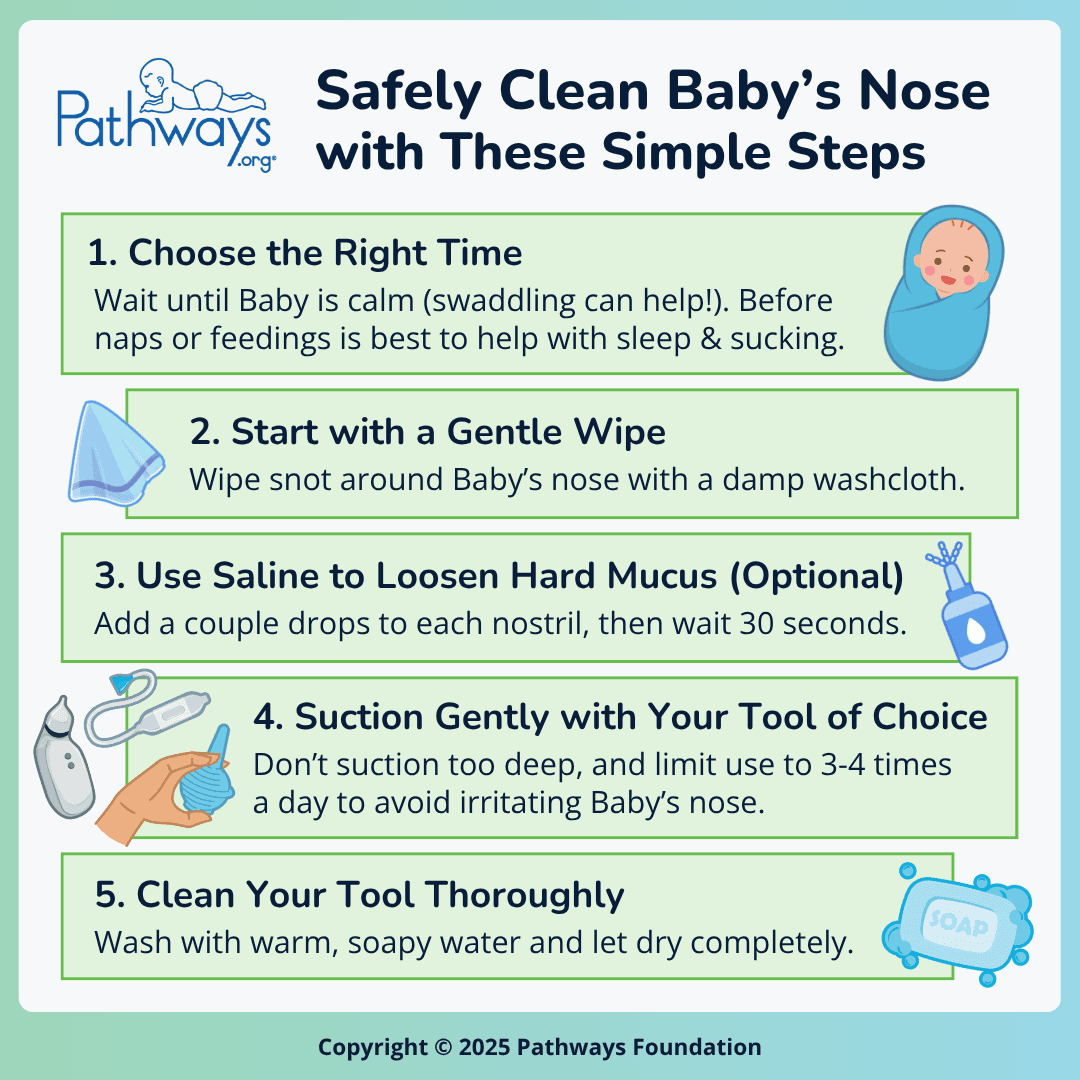
Cleaning a baby’s nose is delicate but important. It helps your baby breathe easier and stay comfortable. Follow this simple step-by-step process to clean your baby’s nose safely. Each step guides you through the right way to do it without causing harm or discomfort.
Preparing Your Baby
Start by washing your hands well with soap and water. Find a calm, quiet place to clean your baby’s nose. Hold your baby gently but firmly. You can sit or lie down with your baby on your lap. Use a soft cloth to wipe any mucus around the nose first. Talk softly to keep your baby calm.
Applying Saline Drops
Use saline drops to loosen mucus inside the nose. Tilt your baby’s head slightly back or keep it straight. Put 1 or 2 drops of saline in each nostril. Wait about a minute for the saline to work. This helps soften the mucus and makes it easier to remove.
Using The Aspirator Or Syringe
Choose a bulb syringe or nasal aspirator made for babies. Squeeze the bulb to push air out before placing it gently in the nostril. Slowly release the bulb to suck out the mucus. Remove the syringe and squeeze the mucus onto a tissue. Repeat for the other nostril. Be gentle to avoid hurting the baby’s nose.
Cleaning And Storing Tools
After cleaning, wash the syringe or aspirator with warm soapy water. Rinse well to remove all soap. Let the tools air dry on a clean towel. Store them in a clean, dry place until the next use. Regular cleaning keeps the tools safe and hygienic for your baby.
Tips To Keep Baby Comfortable
Keeping your baby comfortable during nose cleaning is very important. Babies can feel uneasy or scared during this process. Helping them stay calm makes cleaning easier and safer. Simple steps can make a big difference.
Timing The Cleaning
Pick a time when your baby is calm and happy. Avoid cleaning right after feeding to prevent fussiness. Try cleaning before a nap or bedtime. A relaxed baby will cooperate better and feel less stressed.
Calming Techniques
Gently hold your baby in a cozy position. Softly talk or sing to soothe them. Using a warm washcloth on the nose can help. Taking slow, deep breaths together can calm both of you. These small actions ease discomfort and fear.
Avoiding Over-cleaning
Clean only when your baby’s nose looks blocked or stuffy. Too much cleaning can irritate the delicate skin inside. Keep the process short and gentle. Less is more to avoid causing pain or redness.
When To See A Doctor
Knowing when to see a doctor is important for your baby’s nose care. Some signs mean the baby needs medical help. Acting early keeps your baby safe and comfortable.
Persistent Nasal Congestion
If your baby has a stuffy nose for more than ten days, see a doctor. Long congestion can cause breathing issues or infections. A doctor can find the cause and suggest proper treatment.
High Fever Accompanied By Nasal Symptoms
A fever over 100.4°F (38°C) with nasal blockage or discharge needs medical attention. It might signal an infection needing medicine. Do not wait too long to seek help.
Difficulty Breathing Or Feeding
When your baby struggles to breathe or feed, visit a healthcare provider. Nasal blockage can make these tasks hard. A doctor can check for serious problems and offer relief.
Unusual Nasal Discharge
Thick, colored, or foul-smelling mucus can point to infection. Clear, thin mucus is usually normal. Call a doctor if discharge changes or worsens quickly.
Signs Of Pain Or Irritation
Crying more than usual or touching the nose often may signal discomfort. This might mean irritation or infection. A healthcare professional can diagnose and treat the cause.
Common Mistakes To Avoid
Cleaning a baby’s nose is important but must be done with care. Many parents make mistakes that can hurt their baby or cause discomfort. Avoiding these errors keeps your baby safe and comfortable during nose cleaning.
Using Cotton Swabs Inside The Nose
Cotton swabs can push mucus deeper into the nose. They can also hurt the soft skin inside. Use soft tissues or a nasal aspirator instead.
Cleaning Too Often
Cleaning the nose too often can irritate the baby’s skin. It can cause redness and swelling. Clean only when the nose looks blocked or dirty.
Using Harsh Chemicals Or Saline
Some parents use strong solutions to clean the nose. This can dry out or irritate the nose lining. Use only mild saline drops made for babies.
Forcing The Nose To Clear
Trying hard to clear the nose can cause pain or bleeding. Be gentle and patient. Let the mucus loosen naturally with saline drops.
Ignoring Signs Of Infection
Redness, swelling, or bad smell can mean infection. Do not keep cleaning if these signs appear. Talk to a doctor for advice.
Frequently Asked Questions
How Often Should I Clean My Baby’s Nose?
Clean your baby’s nose as needed, especially when congested. Frequent cleaning prevents discomfort and helps clear mucus. Avoid over-cleaning to protect sensitive nasal tissues.
What Tools Are Safe For Cleaning Baby’s Nose?
Use soft saline sprays, nasal aspirators, or bulb syringes. Avoid cotton swabs to prevent injury. Always choose gentle, baby-specific products for safety.
Can I Use Saline Drops For Baby’s Nose?
Yes, saline drops safely loosen mucus in your baby’s nose. They help clear nasal passages gently and reduce congestion without side effects.
When Should I Avoid Cleaning My Baby’s Nose?
Avoid cleaning if the baby shows nasal bleeding or irritation. If congestion persists or worsens, consult a pediatrician for proper guidance.
Conclusion
Cleaning your baby’s nose safely keeps them comfortable and healthy. Use gentle tools and soft movements. Avoid harsh or sharp objects that can hurt delicate skin. Clean regularly but not too often to prevent irritation. Always wash your hands before and after cleaning.
Stay calm and patient during the process. A clean nose helps your baby breathe better and sleep well. Small steps make a big difference in your baby’s care. Keep these simple tips in mind for safe and easy nose cleaning.


